


Sarah Rector: The 11-Year-Old Creek Freedman Who Became the Richest Black Girl in America
Sarah Rector’s remarkable journey from a Creek Freedman child to becoming the richest Black girl in America is one of the most fascinating stories in American history. Her life was dramatically transformed in 1913 when oil was discovered on her land, a moment that not only changed her personal fortunes but also highlighted the complex socio-political landscape of the Creek Nation. The land Sarah inherited was directly tied to the Treaty of 1866, a post-Civil War agreement that profoundly impacted Creek Freedmen and their descendants. This article explores Sarah’s life story through the history of the Creek Nation, the tribe’s actions during and after the Civil War, and how these historical events created the circumstances that led to her incredible wealth. Her story serves as a lens through which to examine the broader challenges faced by Creek Freedmen and their fight for recognition and equality in the years following the Civil War.
The Creek Nation: A History
The Creek Nation, originally part of the Southeastern United States, consisted of various tribes that formed a powerful confederacy. The Creeks, or Muscogee, played a significant role in the early history of the American South, particularly in Georgia and Alabama. The term “Muscogee” comes from the Muscogee-speaking people who made up the core of the Creek Confederacy, a powerful alliance of several tribes. Over time, “Creek” became the more commonly used name by European settlers, likely derived from the English settlers’ observation of the tribe’s villages situated near rivers and creeks. Despite the name change, the Muscogee people have always referred to themselves as such, emphasizing their shared cultural and linguistic identity. Known for their agricultural prowess and complex social structures, the Creek Nation entered into a series of treaties with European settlers during the 18th century. However, as white settlers encroached on their land, tensions grew.
The Creek War of 1813-1814 was a critical moment in the history of the Creek Nation, fueled by deep internal divisions between the Upper and Lower Creeks over how to respond to increasing U.S. encroachment on their land. The Upper Creeks, known as the Red Sticks, were traditionalists who opposed European-American influence and sought to preserve Creek culture, while the Lower Creeks were more willing to adopt aspects of settler culture and maintain peaceful relations with the United States. Three prominent leaders of the Red Stick faction—William Weatherford (Red Eagle), Menawa, and Peter McQueen—emerged as central figures in the Creek resistance.
William Weatherford, or Red Eagle, was born around 1780 to a Creek mother and a Scottish father, giving him a unique position within both Creek and European-American communities. Though he initially attempted to maintain neutrality, Weatherford ultimately sided with the Red Sticks as tensions escalated. Menawa, also of a prominent Creek family, was another key leader of the Red Sticks, deeply committed to defending traditional Creek ways of life against the growing influence of white settlers. Peter McQueen, a staunch traditionalist, shared this commitment and played a major role in leading Red Stick raids against U.S. interests.
The Creek War erupted into violence in 1813, when McQueen and his followers, seeking to strike back at settlers, led a raid on a U.S. supply convoy. This act of defiance helped set the stage for one of the war’s most infamous events: the Red Stick attack on Fort Mims. Weatherford, Menawa, and McQueen all played significant roles in the assault, where hundreds of settlers and militiamen were killed. The brutality of the Fort Mims massacre shocked the American public and led to a fierce response from U.S. forces under General Andrew Jackson. Jackson, backed by allied Lower Creeks and Cherokee warriors, launched a campaign to crush the Red Sticks.
The decisive moment in the war came at the Battle of Horseshoe Bend in 1814, where Menawa and Weatherford led the Red Stick forces in a final stand against Jackson’s army. Menawa, though severely wounded during the battle, continued to fight until the Red Sticks were overwhelmed by the superior numbers and firepower of the U.S. forces. Peter McQueen, meanwhile, had fled to Spanish Florida to escape the U.S. military’s advance, continuing to resist until his eventual capture.
In the aftermath of the battle, the Creek resistance collapsed. Weatherford, known for his dignity and leadership, famously surrendered to Andrew Jackson, pleading for mercy for his people. Jackson, impressed by his bravery, spared his life. Weatherford lived the remainder of his life peacefully as a planter in Alabama. Menawa, though gravely injured, also survived the war but saw his people forced to cede millions of acres of Creek land to the U.S. government under the Treaty of Fort Jackson. Peter McQueen, who had escaped to Florida, continued to resist until his eventual capture, but his role in the war marked him as one of the fiercest opponents of U.S. expansion. Together, these three men embodied the Creek Nation’s desperate struggle to maintain its sovereignty and way of life in the face of overwhelming American expansion.
The aftermath of the war resulted in the Treaty of Fort Jackson, in which the Creek Nation was forced to cede over 21 million acres of land, including territory from both Upper and Lower Creeks to the United States. This loss marked the beginning of the Creeks’ rapid decline in the Southeast and set the stage for their eventual removal from their ancestral lands.
The Indian Removal Act and the Trail of Tears
By the 1830s, the U.S. government, under the Indian Removal Act, embarked on a campaign to forcibly relocate the Creek Nation, along with the other “Five Civilized” tribes of the Southeast, to lands west of the Mississippi River. The Creek Nation, along with the Cherokee, Choctaw, Chickasaw, and Seminole, had become known as part of the “Five Civilized Tribes” in the early 19th century. This designation was used by European-American settlers and U.S. government officials to describe these tribes because they had adopted various aspects of European-American culture, including written laws, centralized governments, Christianity, European-style farming, and, in some cases, the practice of chattel slavery.
The term began to emerge in the early 1800s, particularly as the U.S. government-initiated policies of assimilation for Native American tribes in the Southeast. By the time of the Indian Removal Act of 1830, which mandated the relocation of these tribes to Indian Territory, the designation of “Five Civilized Tribes” was firmly in place. This label, however, ignored the tribes’ rich and complex pre-colonial cultures, reducing their identity to how closely they had conformed to settler standards.
The forced migration from their lands in the Southeast, part of a broader policy to open up Native lands for white settlement, became known as the “Trail of Tears.” The Creeks, who had already lost vast amounts of land through treaties such as the Treaty of Fort Jackson and the Treaty of Indian Springs, were now compelled to leave their ancestral homes in Alabama and Georgia and move to Indian Territory, in what is now present-day Oklahoma. The journey was brutal thousands of Creeks died from disease, exposure, and starvation along the way, marking it as one of the most devastating chapters in Native American history.
Two key Creek leaders played critical roles during this period of turmoil. William McIntosh, a controversial figure, was instrumental in hastening the Creek removal through his signing of the Treaty of Indian Springs in 1825. McIntosh, who was of mixed Creek and Scottish descent, agreed to cede large portions of Creek land to the U.S. government in exchange for personal benefits. His actions were seen as a betrayal by many Creeks, leading to his execution by his own people under Creek law, which forbade unauthorized land cessions. On the other hand, Opothleyahola emerged as a leader who resisted removal and fought to protect the rights of his people. A staunch opponent of the forced migration, he led a group of Creeks who opposed signing removal treaties. Despite his resistance, Opothleyahola and his followers were eventually forced to leave their homelands and join other Creeks in Indian Territory.
Once relocated to Indian Territory, the Creek Nation faced the difficult task of rebuilding their society. However, internal divisions continued to plague the tribe, particularly over the issue of slavery. Some Creeks, particularly those of wealthier, land-owning classes, owned African slaves and sided with the Confederacy during the Civil War. Opothleyahola, who remained loyal to the Union, led Creek and other Native followers in a campaign against the pro-Confederate Creeks, resulting in a civil war within the Creek Nation. These divisions reflected broader national conflicts, with Creek leaders and citizens deeply split over their allegiances during the war. Despite these challenges, the Creek Nation persisted, working to rebuild their communities and maintain their cultural identity in the face of relentless U.S. expansion and the pressures of war and displacement.
Slavery and the Creek Nation
The practice of Black slavery in the Creek Nation began in the late 18th century and mirrored the broader adoption of chattel slavery by other Native American nations, particularly the other members of the Five Civilized Tribes: the Cherokee, Choctaw, Chickasaw, and Seminole. As the Creek Nation became increasingly involved in trade and diplomatic relations with European-American settlers, they began to adopt European customs, including the practice of owning enslaved Africans. This practice was encouraged and sometimes forced upon Native nations by European settlers and the U.S. government as part of broader assimilation policies.
Initially, the relationship between enslaved Africans and the Creek people was not identical to the harsh conditions of chattel slavery practiced by European-Americans. Some early African slaves in Creek society were integrated into the tribe through kinship or served in domestic roles. However, over time, as the Creek Nation sought to align more with U.S. economic systems, their practice of slavery became more similar to that of European settlers. By the early 19th century, wealthier Creeks, particularly the Lower Creeks, owned African slaves who worked on agricultural plantations, growing crops such as cotton, which had become a lucrative export commodity. Enslaved Black people were treated as property and had limited rights, as was the case in the broader U.S. South.
The Creek Civil War in 1813-1814, in part a reflection of internal divisions over European influence, also exposed differing views on slavery. The Upper Creeks, or Red Sticks, who resisted European cultural influence, were less likely to own slaves and saw the practice as part of the growing assimilation of Creek society by the Lower Creeks. The Lower Creeks, who had more economic ties to settlers and had integrated European agricultural practices, were more inclined to support slavery as a means of economic growth.
The divisions over slavery within the Creek Nation persisted even after the Creek War and the tribe’s forced relocation to Indian Territory in the 1830s under the Indian Removal Act. In Indian Territory, Creek leaders like William McIntosh and others continued to own slaves, further entrenching the institution within the nation. However, this dynamic began to shift during the Civil War.
The Creek Nation and the Civil War
When the Civil War broke out in 1861, the Creek Nation, like many other Native nations, was divided. Some Creeks, particularly those who owned slaves, supported the Confederacy, which sought to preserve slavery. Other Creeks, including a significant number of enslaved people and free Black Creeks, sided with the Union, hoping for emancipation and better treatment. The Creek leader Opothleyahola led a faction of Creeks who were loyal to the Union and sought to protect both Black Creeks and enslaved individuals who sought freedom.
In the aftermath of the Civil War, the U.S. government imposed new treaties on the Five Civilized Tribes, including the Creek Nation, which dramatically reshaped the lives of the Creek Freedmen—the descendants of enslaved Africans owned by Creek citizens. The Treaty of 1866 was particularly transformative, requiring the Creek Nation to emancipate all enslaved individuals, grant them full tribal citizenship, and provide land allotments to both Black Creeks and Creek Freedmen. This treaty, however, did not fully resolve the deep-rooted tensions within the tribe. Many Creek leaders and citizens resented the federal government’s imposition of new laws, especially those that granted citizenship and land to freedmen. The allocation of land to Creek Freedmen was seen as a challenge to the traditional tribal order and exacerbated the divisions between Creek citizens and the freedmen.
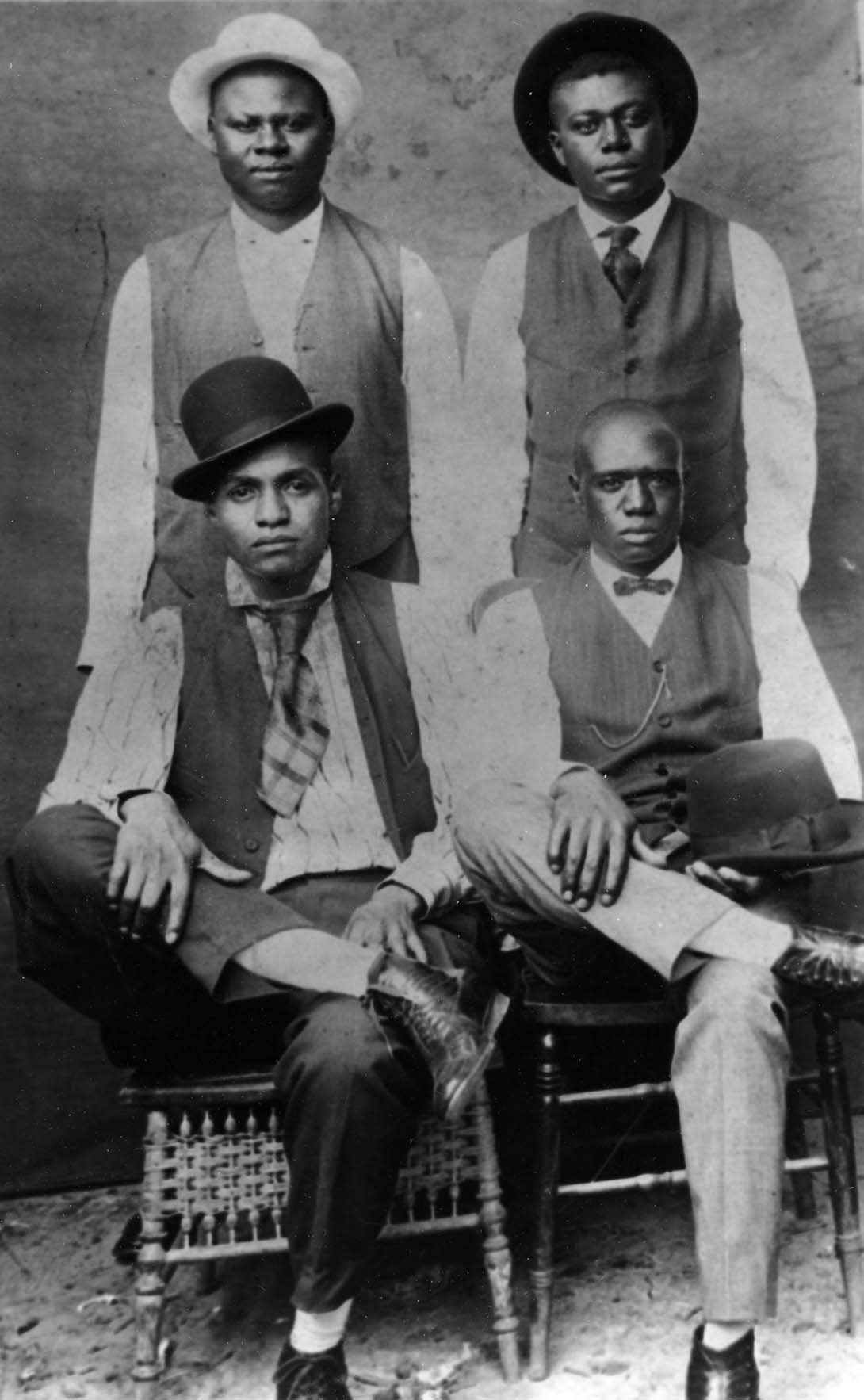
Creek Freedmen
The Dawes Act of 1887, which was implemented to break up communal tribal land into individual allotments, further complicated the situation. Under this law, members of the Creek Nation, including Creek Freedmen, were allocated parcels of land. These land allotments were meant to integrate the freedmen and other Native people into the U.S. economic system by encouraging private landownership and farming. However, many freedmen, including Sarah Rector’s family, were given marginal, rocky land that was considered unsuitable for agriculture.
The unequal distribution of land mirrored the broader racial and economic inequalities faced by the Creek Freedmen. While some members of the Creek Nation prospered, particularly those who had better land or financial resources, many freedmen struggled to make a living. This disparity was compounded by racial prejudices within the Creek Nation and the broader American society, making it difficult for freedmen to fully integrate into either community.
The Role of Creek Leaders in Freedmen Rights and Land Distribution
Prominent Creek leaders during this period, such as Chief Samuel Checote and Chief Pleasant Porter, played crucial roles in navigating the complexities of the post-war era. Chief Samuel Checote, who served as principal chief of the Creek Nation from 1867 to 1875, was a Union supporter during the Civil War and worked to bring stability to the Creek Nation in the aftermath of the conflict. He faced the difficult task of balancing the interests of the freedmen with those of the Creek citizens who had sided with the Confederacy.
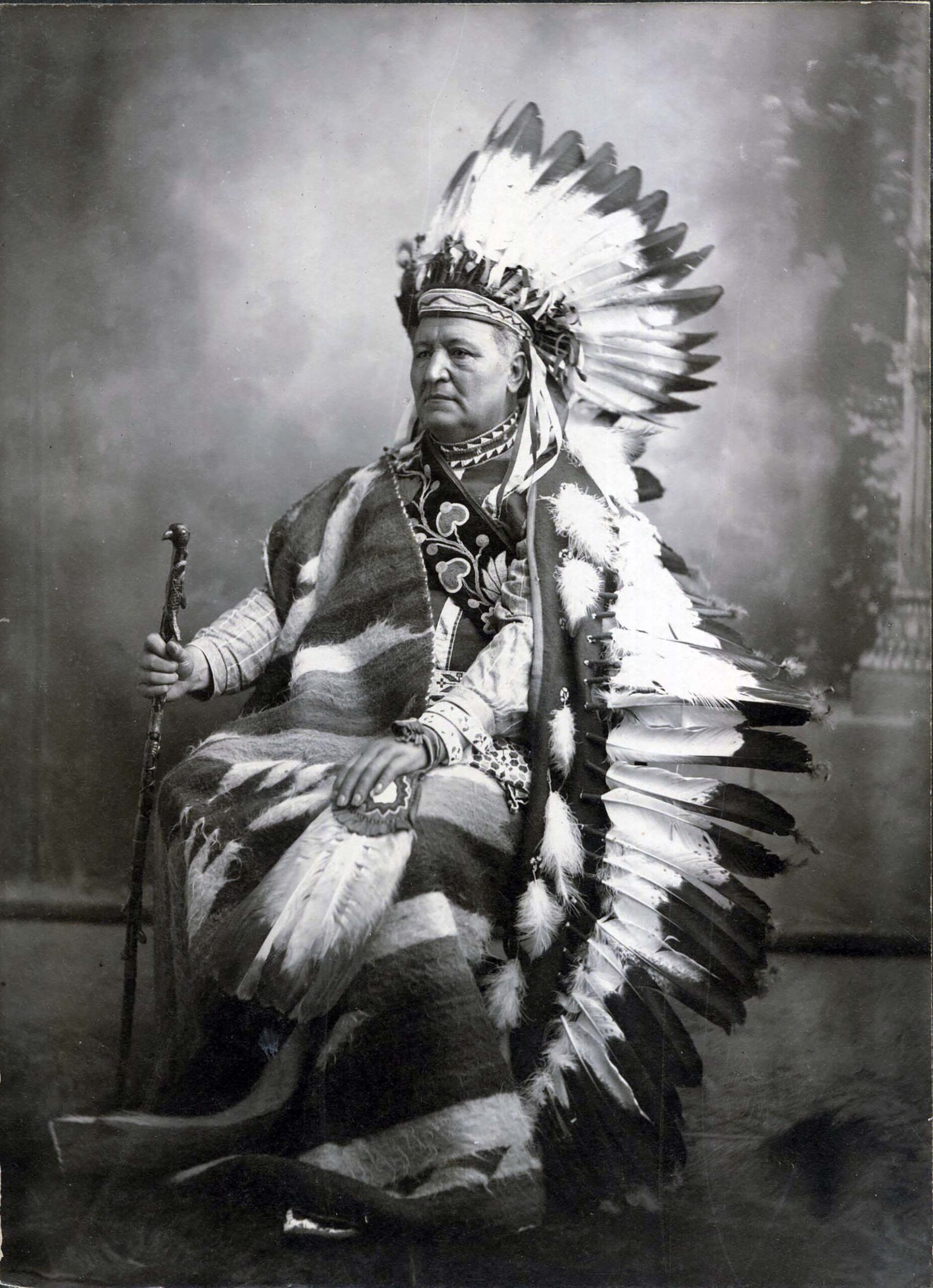
Chief Pleasant Porter of the Creek Nation, 1903
Chief Pleasant Porter, who succeeded Checote as principal chief, also grappled with the challenges of land distribution and integration of the freedmen. While Porter was known for his efforts to modernize the Creek Nation and promote economic development, the tensions over land ownership and the role of the freedmen in Creek society continued to simmer.
These internal conflicts shaped the lives of Creek Freedmen, who, despite being granted land and citizenship rights, were often marginalized within the tribe. The experiences of the Rector family were emblematic of the broader struggles faced by freedmen in the Creek Nation, as they navigated the legal and social barriers that sought to limit their economic and social mobility.
Sarah Rector’s Early Life: A Creek Freedman in Oklahoma
Sarah Rector was born on March 3, 1902, in Indian Territory, near the all-Black town of Taft, Oklahoma. Her parents, Joseph and Rose Rector, were descendants of slaves of the Creek Nation who had become Creek Freedmen after the Civil War and their lives were shaped by the complex legacy of the Treaty of 1866. Like many other freedmen, the Rectors were granted land as part of the federal government’s effort to integrate Native Americans and freedmen into the U.S. economic system. Sarah’s family was allotted 159 acres of land in Glenpool, Oklahoma, 60 miles from their home.
The land given to the Rector family, like much of the land allotted to Creek Freedmen, was rocky and infertile, making it unsuitable for farming. This was a common problem for many freedmen, who received fewer valuable parcels of land compared to those given to other tribal members or white settlers. The Rector family, while not living in extreme poverty, struggled to make ends meet. The annual property tax on Sarah’s allotment, equivalent to $1,000 today, was a heavy burden for the family.
In an effort to relieve this financial pressure, Sarah’s father, Joseph, leased the land to the Standard Oil Company in 1911. This decision would prove to be life-changing, though at the time, it was seen as a last-ditch effort to cover the taxes on what was considered worthless land.
The Discovery of Oil and Sarah’s Transformation into a Millionaire
On August 29, 1913, Sarah’s fortunes took a dramatic turn when oil was discovered on her land. B.B. Jones, an independent oil driller, struck a “gusher” that produced 2,500 barrels of oil per day. The discovery of oil instantly made Sarah Rector one of the wealthiest individuals in the country. By October of that year, Sarah had received her first royalty payment of $11,567 (equivalent to $357,000 today), and her income continued to soar as more oil was extracted from her land.
The national press quickly picked up on Sarah’s story, labeling her the “richest Black girl in America.” This attention brought both admiration and unwanted scrutiny. At just 11 years old, Sarah became a national sensation, with people across the country vying for her money. She received countless letters from strangers asking for loans, gifts, and even marriage proposals, despite the fact that she was still a child.
While Sarah’s wealth brought her fame, it also attracted the attention of those who sought to control her finances. Under Oklahoma law, minors who were Native American or Black and possessed significant financial assets were required to have a white guardian. This law reflected the broader racial dynamics of the time, with white guardians being viewed as more “capable” of managing wealth than Black or Native families.
Guardianship and Exploitation: The Fight to Protect Sarah’s Wealth
In 1913, Sarah’s guardianship was transferred from her parents to a white lawyer and family acquaintance named T.J. Porter. This was a common practice for wealthy Black and Native minors, whose families were often deemed unfit to manage their assets. Sarah’s case, however, drew the attention of the Black press and civil rights leaders, who feared that her wealth was being mismanaged by her white guardians.
The Chicago Defender, a prominent African American newspaper, took a special interest in Sarah’s case. In 1914, the newspaper published a series of articles questioning whether Sarah’s guardians were acting in her best interests. This prompted national Black leaders like Booker T. Washington and W.E.B. Du Bois to intervene on Sarah’s behalf. In June 1914, James C. Waters Jr., an agent for the NAACP, wrote to Du Bois, expressing concerns that Sarah’s guardians were exploiting her wealth.
The intervention of Washington and Du Bois ensured that Sarah’s financial interests were better protected. In October 1914, Sarah was enrolled in the Tuskegee Institute’s Children’s School, a prestigious Black boarding school in Alabama. There, she received a quality education and was shielded from many of the people seeking to exploit her newfound wealth.
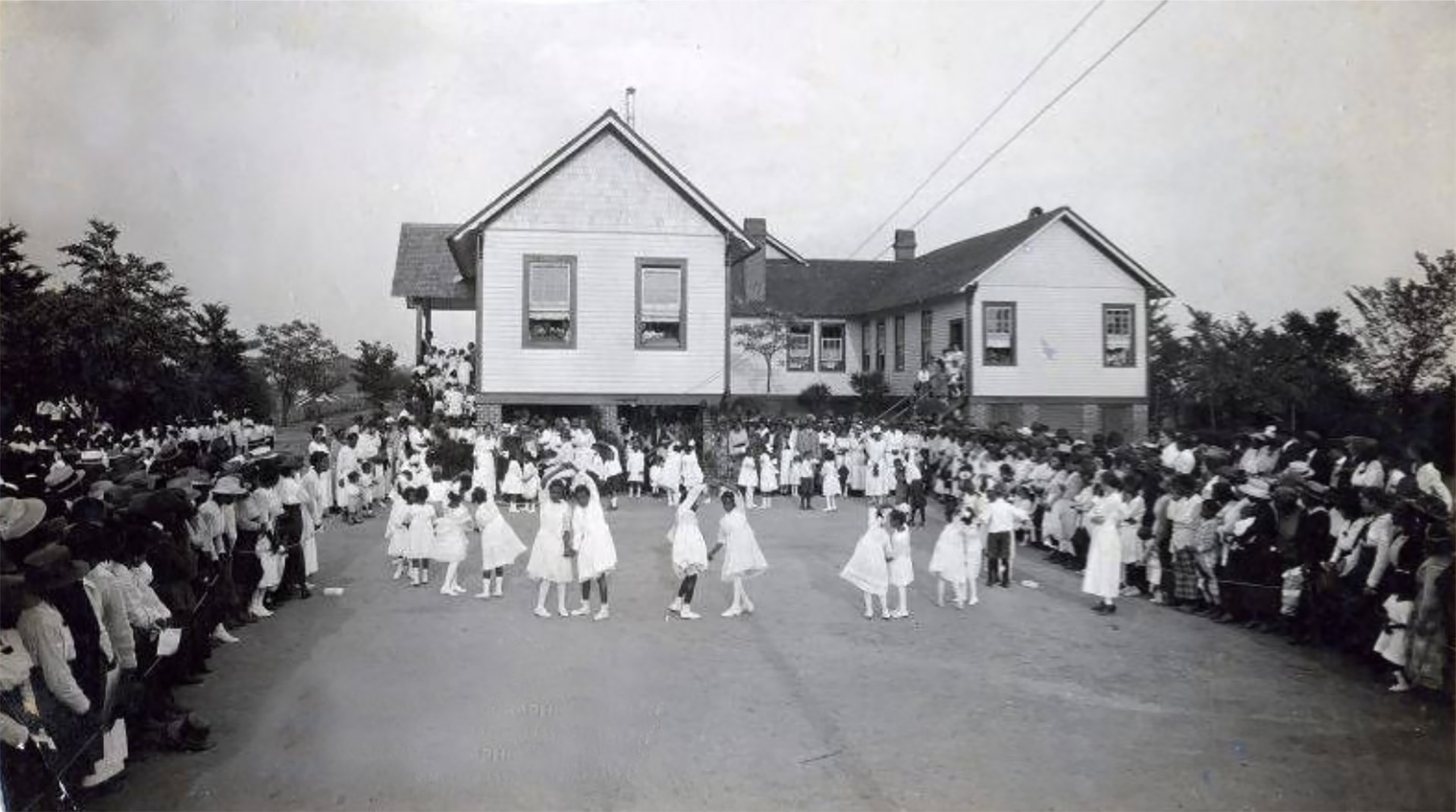
Tuskeegee Institute Children’s School
Sarah Rector’s Later Life: Wealth, Fame, and the Great Depression
By the time Sarah Rector turned 18 in 1920, she was a millionaire many times over. She owned stocks, bonds, businesses, and over 2,000 acres of prime land. After leaving the Tuskegee Institute, Sarah moved with her family to Kansas City, Missouri, where she purchased a large home and continued to enjoy the fruits of her wealth. In 1920, she married Kenneth Campbell, a local businessman, and they had three sons together.
Sarah Rector’s wealth allowed her to live a life of luxury, hosting lavish parties and mingling with celebrities like Duke Ellington and Count Basie. However, like many wealthy Americans, Sarah was not immune to the effects of the Great Depression. The economic collapse of the 1930s significantly reduced her fortune, and she was eventually forced to sell her home. Despite this setback, Sarah maintained a comfortable lifestyle and remained an important figure in the Black community.
Sarah and Kenneth divorced in 1930. Following the divorce, she married William Crawford, a restaurant owner, in 1934, and they continued to live in Kansas City. Throughout her later years, Sarah remained a private person, far removed from the public spotlight she had experienced as a child.
She died on July 22, 1967, at the age of 65 and was buried in Blackjack Cemetery in her childhood hometown of Taft, Oklahoma.
Sarah Rector’s story is a remarkable example of resilience and triumph in the face of adversity. Her rise to wealth at such a young age was extraordinary, but her life also highlights the challenges faced by the Creek Freedmen in their struggle for equality and recognition. The legacy of the Treaty of 1866, the Dawes Act, and the internal divisions within the Creek Nation created a complex environment in which freedmen like Sarah’s family had to fight for their rights and their land.
The Creek Nation’s history during and after the Civil War, shaped by leaders like Samuel Checote and Pleasant Porter, reflected the broader tensions within Native American society as they navigated the changing political landscape of the United States. For Sarah Rector, these historical forces shaped the circumstances that led to her incredible wealth, but also the challenges she faced in maintaining it.
Sarah’s life is a testament to the resilience of the Creek Freedmen and their determination to secure their place in a world that often sought to marginalize them. Her story continues to inspire, serving as a powerful reminder of the importance of justice, equality, and perseverance.
Watch our documentary “In Search of Bass Reeves” for more on Blacks in the Old West.


Henry Ossian Flipper: A Trailblazer in Military History
Henry Ossian Flipper’s journey to becoming the first African American to graduate from the United States Military Academy at West Point is a story of resilience and perseverance. His life and career, marked by discrimination and injustice, also highlight his

Bud Ledbetter: Deputy U.S. Marshal, Loyal Friend
In the annals of U.S. Marshal history, a few legendary names stand out—Bass Reeves, Wyatt Earp, Heck Thomas, Sam Sixkiller and among them, Bud Ledbetter. Born into a turbulent era of the American frontier, Bud Ledbetter’s career as a lawman