


A History of the Buffalo Soldiers and a Look at Bynum Colbert’s Journey from Buffalo Soldier to Deputy U.S. Marshal
The Buffalo Soldiers hold a revered place in American history, symbolizing a legacy of resilience, courage, and patriotism. These brave African American soldiers served in the U.S. Army during the late 19th and early 20th centuries, leaving an indelible mark on the country’s military and cultural history. One notable figure among them was Bynum Colbert, who not only served as a Buffalo Soldier but went on to become a distinguished Deputy U.S. Marshal working alongside the legendary lawman Bass Reeves. In this article, we will explore the comprehensive history of the Buffalo Soldiers, with a special focus on the life and accomplishments of Bynum Colbert.
Who Were the Buffalo Soldiers? Understanding Their Origins
The Buffalo Soldiers were first established in 1866, when Congress passed legislation to create six all-Black regiments within the U.S. Army after the Civil War. These included the 9th and 10th Cavalry and the 24th and 25th Infantry Regiments. Their mission was to protect settlers, build infrastructure, and enforce the law in the expanding western territories.
The name “Buffalo Soldiers” was reportedly given to them by Native American tribes, who admired their tenacity and fighting spirit, much like the revered buffalo on the plains. This moniker became a symbol of their strength and endurance throughout their years of service.
The Buffalo Soldiers played a vital role in American history by contributing to westward expansion, protecting U.S. borders, and participating in major military campaigns, including the Indian Wars, the Spanish-American War, and both World Wars. Beyond combat, these soldiers built forts, maintained telegraph lines, and even served as some of the earliest national park rangers, safeguarding public lands like Yosemite and Sequoia.
The Formation of the Buffalo Soldiers: A Response to Post-Civil War Needs
The creation of the Buffalo Soldiers in 1866 was a direct response to the needs of the U.S. Army as the country expanded westward. The westward migration required a military presence to defend settlers from Native American resistance and maintain law and order in new territories. The all-Black regiments provided a reliable, disciplined, and skilled military force to meet these needs.
9th and 10th Cavalry Regiments
The 9th and 10th Cavalry regiments were the first of the Buffalo Soldiers, tasked with protecting settlers and surveying the vast western territories. Both regiments became renowned for their effectiveness, earning a reputation for bravery and resilience in the face of harsh conditions and fierce battles.
9th Cavalry Regiment: Formed in New Orleans, the 9th Cavalry Regiment quickly gained respect for its role in maintaining order in Texas and the Southwest. They played a pivotal role in protecting the settlers and railroad workers during the Westward Expansion.
10th Cavalry Regiment: Organized at Fort Leavenworth, Kansas, the 10th Cavalry was involved in numerous conflicts with Native American tribes. They were known for their gallantry during the Indian Wars, particularly in campaigns against the Apache and Comanche tribes.
Key Contributions of the Buffalo Soldiers in the Indian Wars
The Buffalo Soldiers played an integral part in the Indian Wars, a series of conflicts between Native American tribes and the U.S. military. From the 1860s through the 1890s, Buffalo Soldiers were stationed throughout the American West, engaging in combat, securing settlements, and ensuring the safety of settlers.
Notable Engagements
Red River War (1874–1875): The Buffalo Soldiers participated in the Red River War, a campaign to remove Native American tribes from the southern plains and relocate them to reservations. They provided critical support to the U.S. military, helping to capture hostile tribes and enforce government policies.
Battle of Tularosa (1880): In this significant skirmish, Buffalo Soldiers from the 10th Cavalry clashed with Apache warriors, protecting settlers and showcasing their bravery under pressure.
The Apache Wars: The Buffalo Soldiers fought numerous battles during the Apache Wars, including clashes with the infamous Apache leader Geronimo. Their presence was vital in securing peace in the Southwest.
Bynum Colbert: From Buffalo Soldier to Deputy U.S. Marshal
One of the most remarkable figures to emerge from the ranks of the Buffalo Soldiers was Bynum Colbert, a Choctaw Freedman born into slavery who went on to become a respected lawman. Colbert’s story is particularly fascinating because it highlights the transition from military service to law enforcement and his role in maintaining order in Indian Territory alongside other legendary figures such as Bass Reeves.
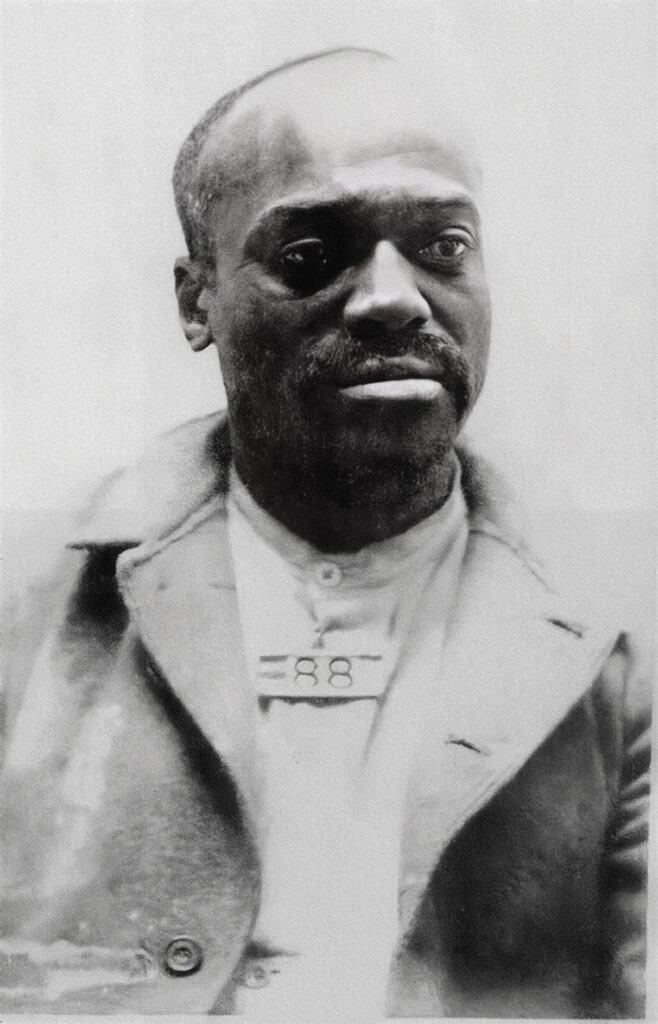
Bynum Colbert
Early Life and Military Service
Bynum Colbert was born in 1850 in Kiamitia County, Choctaw Nation, to Easter Colbert and Ben Colbert, both of whom were enslaved. His mother, Easter, was a slave to Sim Folsom, a prominent Choctaw family, while his father was owned by a widow named M. McGilberry. During the Civil War, Colbert was still enslaved but was taken to Fort Gibson, Indian Territory, where he enlisted in the 2nd Arkansas Volunteer Infantry Regiment in 1863. This regiment would later be reorganized as the 54th United States Colored Troops (U.S.C.T.).
Colbert’s regiment, the 54th U.S.C.T., was stationed in various locations, including Fort Smith and Little Rock, Arkansas. The regiment played a significant role in maintaining peace and repelling Confederate attacks in the region. After his service with the U.S.C.T., Colbert continued his military career by enlisting in the 10th Cavalry, one of the famed Buffalo Soldier regiments, at Fort Arbuckle, Indian Territory, in 1867. He served until 1872, when he settled in Skullyville, Choctaw Nation.
Transition to Law Enforcement
In 1872, after his military service, Colbert transitioned into law enforcement, working under U.S. Marshal Colonel Needles. His first recorded role as a deputy U.S. Marshal came in December 1880, when he was part of a team transferring prisoners to the Detroit House of Corrections. This marked the beginning of his long and storied career as a lawman in Indian Territory.
By 1884, Colbert had established himself as a deputy constable in Fort Smith, Arkansas. He is considered one of the first, if not the first, African American policemen in Fort Smith, a significant accomplishment at a time when Black officers were rare in law enforcement. Colbert’s work as a deputy constable and his role as a deputy U.S. Marshal brought him into contact with dangerous criminals and outlaws.
Working with Bass Reeves
One of the most notable aspects of Bynum Colbert’s career was his partnership with the legendary U.S. Marshal Bass Reeves, one of the first African American U.S. Marshals west of the Mississippi. Colbert and Reeves worked together on several occasions, including in 1883 when they joined a posse to hunt down the killers of lawmen Addison Beck and Merritt. This posse of eleven men, including Reeves and Colbert, successfully located and engaged the outlaws, wounding one of the killers.
Colbert’s partnership with Reeves is a testament to his skills as a lawman. Both men were known for their ability to track down and arrest dangerous criminals in the lawless Indian Territory, where many outlaws sought refuge. Their teamwork, along with their shared background as African American lawmen in a predominantly white-dominated profession, speaks volumes about their professionalism and courage.
Key Arrests and Incidents
Throughout his career as a deputy U.S. Marshal, Colbert made numerous significant arrests and took part in many high-profile cases. Some of the most notable include:
Arrest of Charles Drew (1885): Colbert arrested Drew for murder after a fatal altercation at a dance in the Cherokee Nation. His swift action in apprehending Drew demonstrated his commitment to law and order in the territory.
Capture of Joseph Pierce (1885): Colbert arrested Pierce for assault, again showcasing his dedication to justice.
Tracking Outlaws (1889-1893): Colbert made numerous arrests throughout Indian Territory, bringing in outlaws charged with larceny, assault, and selling illegal liquor. His work during these years kept the territory relatively safe and earned him respect among his peers.
Colbert’s role as a lawman was not without personal risk. He often pursued dangerous criminals deep into Indian Territory, facing life-threatening situations. Despite these dangers, Colbert maintained his resolve, and his efforts greatly contributed to establishing law and order in a region known for its lawlessness.
Challenges and Setbacks
Despite his success as a deputy U.S. Marshal, Colbert’s career was not without controversy. In 1895, he was charged with perjury and presenting false claims against the government. The charges stemmed from an incident where Colbert was accused of overcharging for mileage in an arrest. After a trial, Colbert was convicted and sentenced to one year in the Leavenworth Penitentiary. This conviction marked the end of his career in law enforcement.
Though his conviction tarnished his reputation, Colbert’s contributions as a lawman and Buffalo Soldier remain significant. His dedication to upholding the law in Indian Territory, often in partnership with Bass Reeves, made a lasting impact on the region.
Later Years and Legacy
Following his release from prison in 1896, Bynum Colbert returned to Indian Territory, where he lived quietly with his wife Bettie. The 1910 census shows that the couple lived in Wagoner County, Oklahoma, with two adopted children. By 1920, Bettie Colbert was listed as a widow, suggesting that Bynum had passed away by that time. The exact date of Colbert’s death and his burial location remain unknown.
Despite the challenges he faced later in life, Bynum Colbert’s legacy as one of the earliest African American lawmen in the West remains significant. He was a trailblazer not only as a Buffalo Soldier but also as a deputy U.S. Marshal, playing a crucial role in maintaining law and order during a tumultuous time in American history.
Other Notable Buffalo Soldiers: Heroes Who Shaped History
The Buffalo Soldiers were composed of extraordinary individuals who left lasting legacies. Below, we highlight some of the most notable Buffalo Soldiers who contributed to the U.S. military’s success and paved the way for future generations.
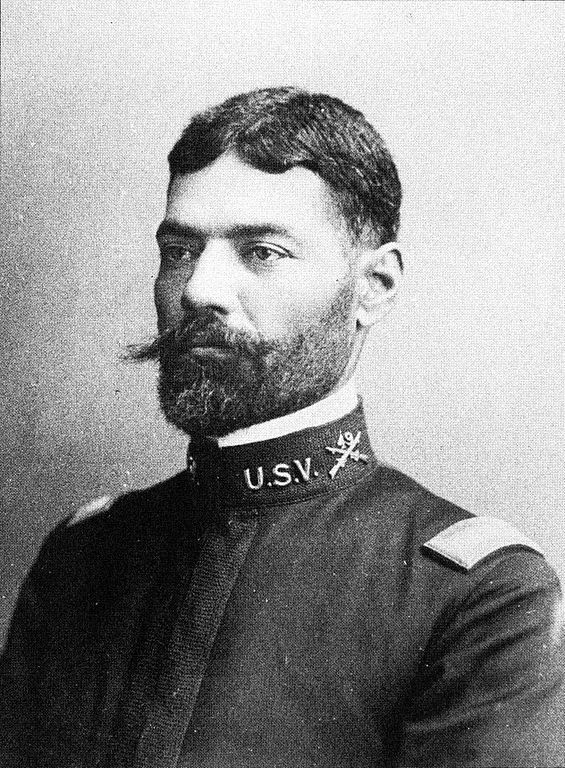
Sergeant Major Edward L. Baker Jr.
Edward L. Baker Jr. was one of the most distinguished members of the Buffalo Soldiers. Born into slavery, Baker rose through the ranks of the U.S. Army, eventually earning the Medal of Honor for his heroic actions during the Spanish-American War. His leadership and bravery in combat solidified his place in history as one of the greatest military figures among the Buffalo Soldiers.
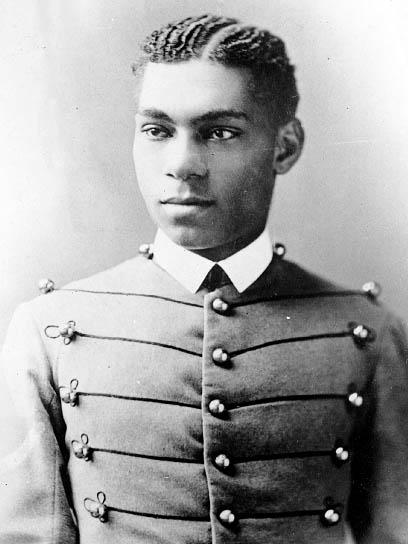
Lieutenant Henry O. Flipper: First Black Graduate of West Point
Henry Ossian Flipper holds the distinction of being the first African American to graduate from the United States Military Academy at West Point. Despite facing racial prejudice and discrimination, Flipper persevered and was commissioned as a second lieutenant in the 10th Cavalry. His service was marked by a strong dedication to duty, although his career was cut short due to an unjust court-martial. Despite this, Flipper’s legacy continues to inspire African American officers in the U.S. Army.
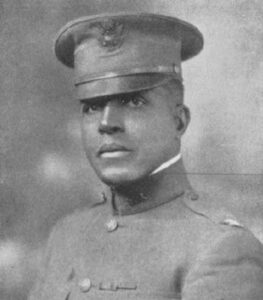
Colonel Charles Young: A Pioneer in Military Leadership
Colonel Charles Young was one of the most prominent leaders among the Buffalo Soldiers. Born to enslaved parents, Young became only the third African American to graduate from West Point. He had a distinguished career in the 9th and 10th Cavalry regiments and served as a military attaché to Haiti and Liberia. Young’s legacy is further honored by his role as the first Black superintendent of a U.S. national park, as he oversaw Sequoia and General Grant National Parks.
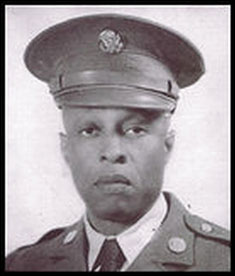
Mark Matthews: The Oldest Buffalo Soldier
Mark Matthews is celebrated as one of the last surviving Buffalo Soldiers, having served in the U.S. Army for over 30 years. Born in 1894, Matthews witnessed both world wars and served with the Buffalo Soldiers’ horse-mounted cavalry unit. Matthews lived to the age of 111, and his longevity, along with his remarkable military career, made him a living symbol of the Buffalo Soldiers’ enduring legacy.
The Role of Buffalo Soldiers in National Parks
In addition to their military duties, Buffalo Soldiers played an important role in the early conservation movement. They were assigned to patrol national parks such as Yosemite and Sequoia in California, acting as some of the first national park rangers.
In the early 1900s, before the establishment of the National Park Service, the U.S. Army was responsible for overseeing many of the country’s national parks. Buffalo Soldiers, primarily from the 9th and 10th Cavalry regiments, were tasked with protecting these parks from poachers, forest fires, and illegal grazing. Their work laid the foundation for the national park system we know today.
The Buffalo Soldiers’ contributions to national parks are still remembered, with monuments and plaques in Yosemite and Sequoia honoring their efforts. Their work as the first Black park rangers has had a lasting impact on the history of conservation in the United States.
The Buffalo Soldiers in the Spanish-American War
During the Spanish-American War of 1898, Buffalo Soldiers played a crucial role in securing U.S. victories, most notably in Cuba. Their bravery under fire and contributions to pivotal battles solidified their reputation as elite soldiers. One of the most famous engagements of the Spanish-American War was the Battle of San Juan Hill, where the Buffalo Soldiers fought alongside Theodore Roosevelt’s Rough Riders. Despite facing overwhelming odds, the Buffalo Soldiers were instrumental in capturing the hill, earning them recognition for their valor and effectiveness in combat.
Challenges Faced by Buffalo Soldiers in the War
Despite their contributions, Buffalo Soldiers faced significant racism and discrimination, both from within the military and from the general public. They were often relegated to menial tasks and faced prejudice from white officers. Nevertheless, they proved themselves as formidable soldiers, gaining the respect of their peers on the battlefield.
Buffalo Soldiers in World War I and World War II
Buffalo Soldiers continued to serve with distinction in both World War I and World War II. Their role in these conflicts highlighted the ongoing struggle for equality and recognition for African American soldiers.
During World War I, the 92nd and 93rd Infantry Divisions, composed largely of Buffalo Soldiers, were deployed to Europe. These soldiers served under French command, as many U.S. officers were reluctant to lead Black troops. Despite this, the Buffalo Soldiers earned praise for their performance in combat, particularly in the Meuse-Argonne Offensive, one of the largest and bloodiest battles of the war.
In World War II, Buffalo Soldiers fought in critical campaigns in both Europe and the Pacific. The 92nd Infantry Division, known as the “Buffalo Division,” played a key role in the Italian Campaign, fighting valiantly despite facing discrimination and segregation within the military.
The Legacy of the Buffalo Soldiers Today
The Buffalo Soldiers’ legacy continues to resonate in the present day. Their service paved the way for future generations of African Americans in the military, and their contributions to American history are celebrated through memorials, museums, and educational programs.
Today, several memorials and museums across the United States honor the Buffalo Soldiers. Notable examples include the Buffalo Soldiers National Museum in Houston, Texas, and the Buffalo Soldier Monument at Fort Leavenworth, Kansas. These institutions preserve the history and legacy of these brave soldiers, ensuring that future generations understand their contributions.
The story of the Buffalo Soldiers has also been immortalized in popular culture. Songs, movies, and books have been dedicated to their legacy, with Bob Marley’s famous song “Buffalo Soldier” bringing their story to a global audience. Their contributions to American history continue to inspire artists, scholars, and activists alike.
The Buffalo Soldiers are more than just a chapter in American military history—they are a testament to the perseverance, bravery, and excellence of African Americans in the face of adversity. From their formation after the Civil War to their role in shaping the modern U.S. Army, their legacy is a powerful reminder of the contributions that Black soldiers have made to the nation. Today, their story continues to inspire and educate, reminding us of the enduring fight for equality and justice.
Whether it’s through their service in the military, their role in national parks, or their influence on American culture, the Buffalo Soldiers remain an important symbol of resilience and courage, representing a pivotal era in the nation’s history.
Watch our documentary “In Search of Bass Reeves” for more on Black pioneers of the Old West.


Henry Ossian Flipper: A Trailblazer in Military History
Henry Ossian Flipper’s journey to becoming the first African American to graduate from the United States Military Academy at West Point is a story of resilience and perseverance. His life and career, marked by discrimination and injustice, also highlight his

Bud Ledbetter: Deputy U.S. Marshal, Loyal Friend
In the annals of U.S. Marshal history, a few legendary names stand out—Bass Reeves, Wyatt Earp, Heck Thomas, Sam Sixkiller and among them, Bud Ledbetter. Born into a turbulent era of the American frontier, Bud Ledbetter’s career as a lawman